
 0800 464 7677
 Ian Wright
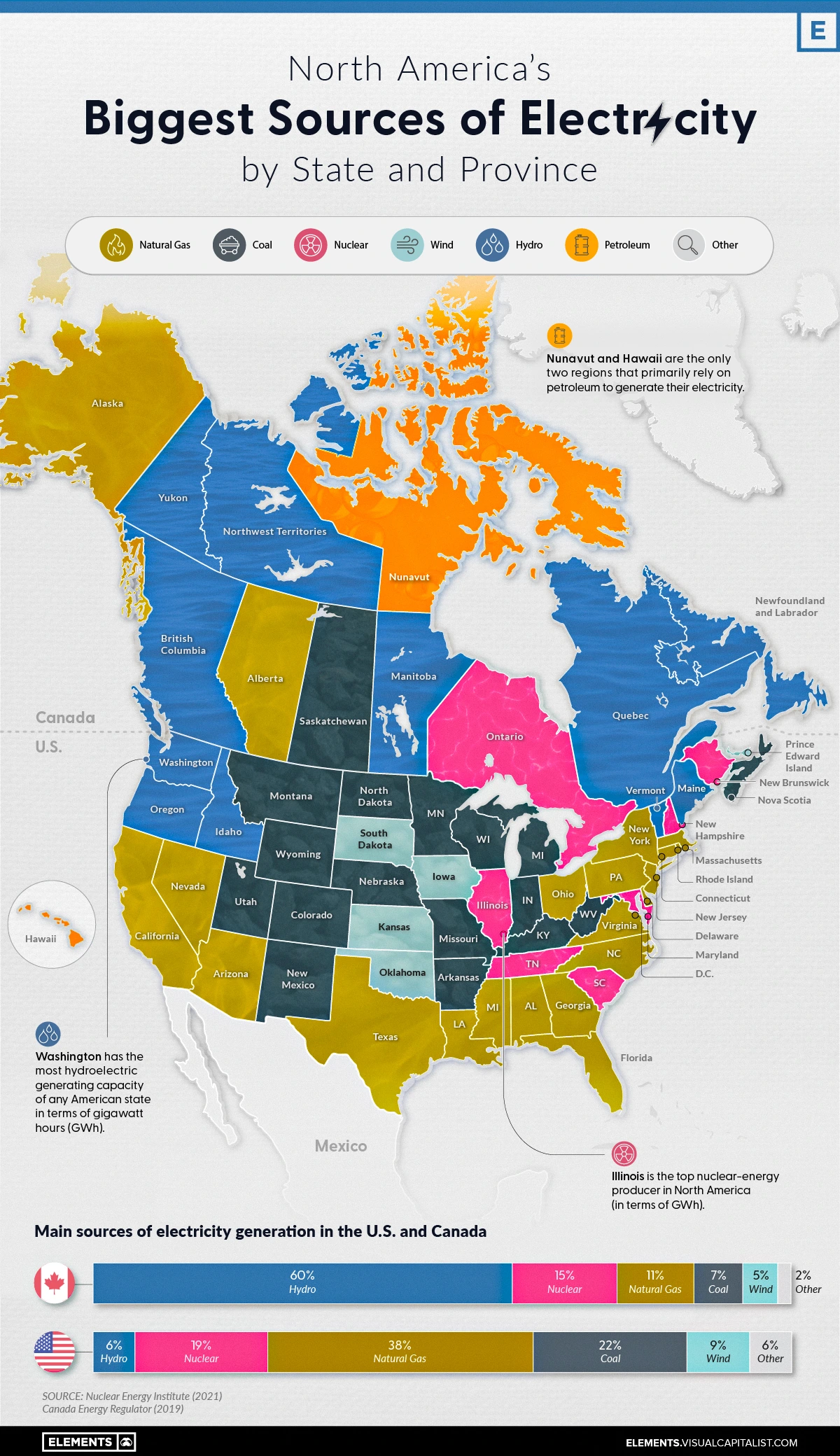
 The maps below each show the biggest source of electricity generation by state, province country and/or country in North America, Europe & Asia.

Biggest Sources of Electricity by US State & Canadian Province
Hydropower (Hydro)
Canada
- British Columbia
- Manitoba
- Quebec
- Newfoundland and Labrador
- Yukon
- Northwest Territories
United States
- Washington
- Oregon
- Idaho
- Maine
- Vermont
Natural Gas
United States
- California
- Nevada
- Arizona
- Texas
- Louisiana
- Mississippi
- Alabama
- Georgia
- Florida
- New York
- Ohio
- Pennsylvania
- New Jersey
- Alaska
- Virginia
- North Carolina
- Rhode Island
- Connecticut
- Delaware
- Washington, D.C.
Canada
- Alberta
Nuclear
United States
- Illinois
- Tennessee
- South Carolina
- New Hampshire
- Maryland
Canada
- Ontario
- New Brunswick
Coal
United States
- Arkansas
- Montana
- Wyoming
- North Dakota
- Nebraska
- Colorado
- Missouri
- West Virginia
- Kentucky
- Indiana
- Michigan
- New Mexico
Canada
- Saskatchewan
- Nova Scotia
Wind
United States
- Iowa
- South Dakota
- Kansas
- Oklahoma
Canada
- Prince Edward Island
Petroleum
United States
- Hawaii
Canada
- Nunavut
Main Sources of Electricity Generation Total
Canada
- 60% Hydro
- 15% Nuclear
- 11% Natural Gas
- 7% Coal
- 5% Wind
- 2% Other
Source: Canada Energy Regulator (2019)
United States
- 38% Natural Gas
- 22% Coal
- 19% Nuclear
- 9% Wind
- 6% Hydro
- 6% Other
Source: Nuclear Energy Institute (2021)
Other facts:
- Nunavut and Hawaii are the only two regions that primarily rely on petroleum to generate their electricity.
- Washington has the most hydroelectric generating capacity of any American state in terms of gigawatt-hours (GWh).
- Illinois is the top nuclear-energy producer in North America (in terms of GWh).
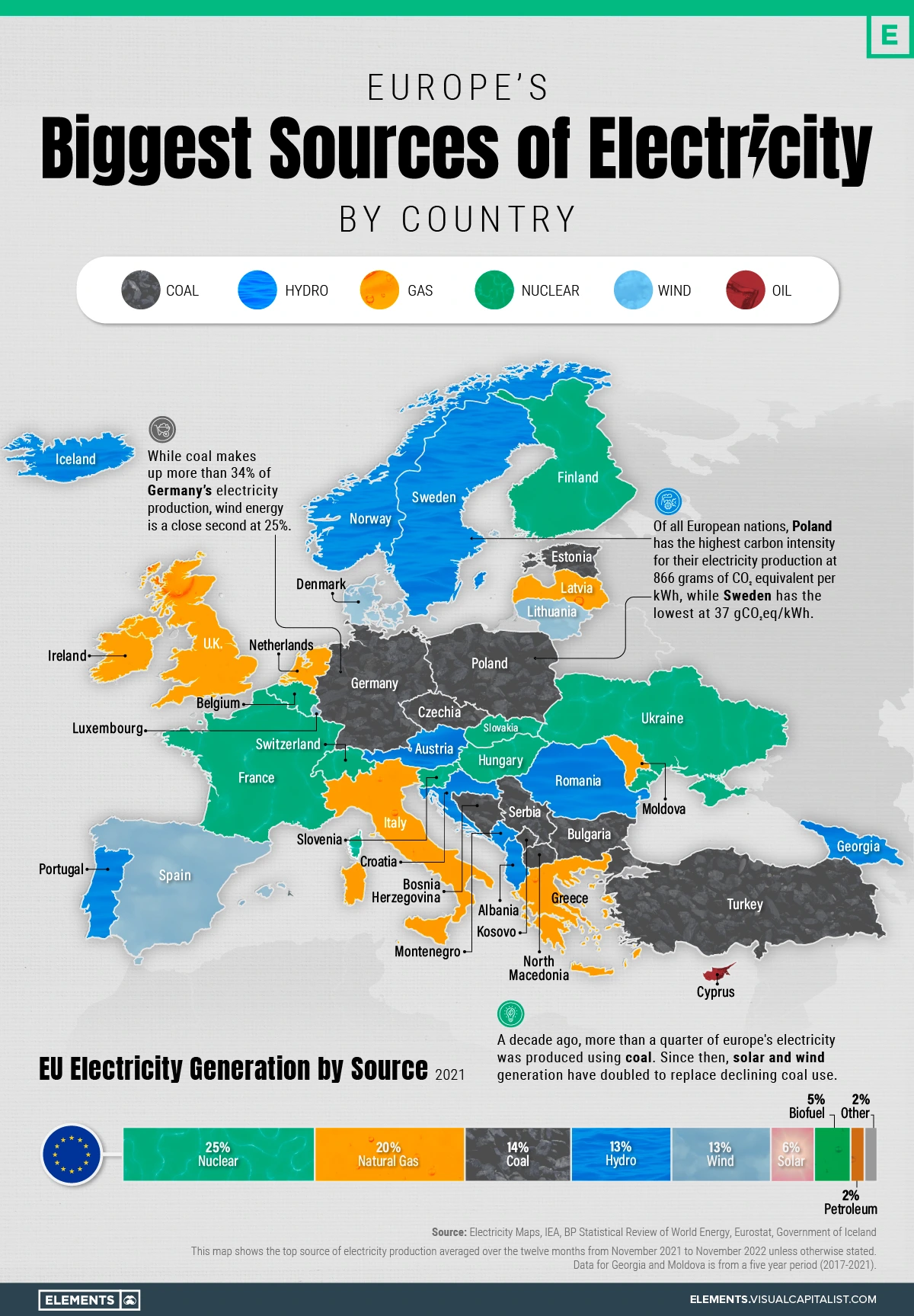
Biggest Sources of Electricity In Europe
Coal
- Germany
- Poland
- Czechia
- Estonia
- Serbia
- Bulgaria
- Turkey
- Bosnia & Herzegovina
- Kosovo
- Montenegro
Hydro
- Norway
- Sweden
- Austria
- Romania
- Albania
- Monetenegro
- Georgia
- Iceland
- Croatia
- Portugal
Gas
- United Kingdom
- Ireland
- Netherlands
- Italy
- Greece
- Latvia
- Moldova
Nuclear
- France
- Finland
- Belgium
- Switzerland
- Slovakia
- Hungary
- Ukraine
- Slovenia
Wind
- Spain
- Lithuania
- Luxembourg
- Denmark
Oil
- Cyprus
| Source | Share |
|---|---|
| Nuclear | 25% |
| Natural Gas | 20% |
| Coal | 14% |
| Hydro | 13% |
| Wind | 13% |
| Solar | 6% |
| Biofuel | 5% |
| Petroleum | 2% |
| Other | 2% |
Other facts:
- Coal makes up more than 34% of Germany’s electricity production with wind is a close second at 25%.
- Poland has the highest carbon intensity in Europe: 866 gCO₂e/kWh
- Sweden has the lowest carbon intensity in Europe: 37 gCO₂e/kWh
- A decade ago, more than a quarter of Europe’s electricity was produced using coal, since then, solar and wind generation have doubled to replace declining coal use.
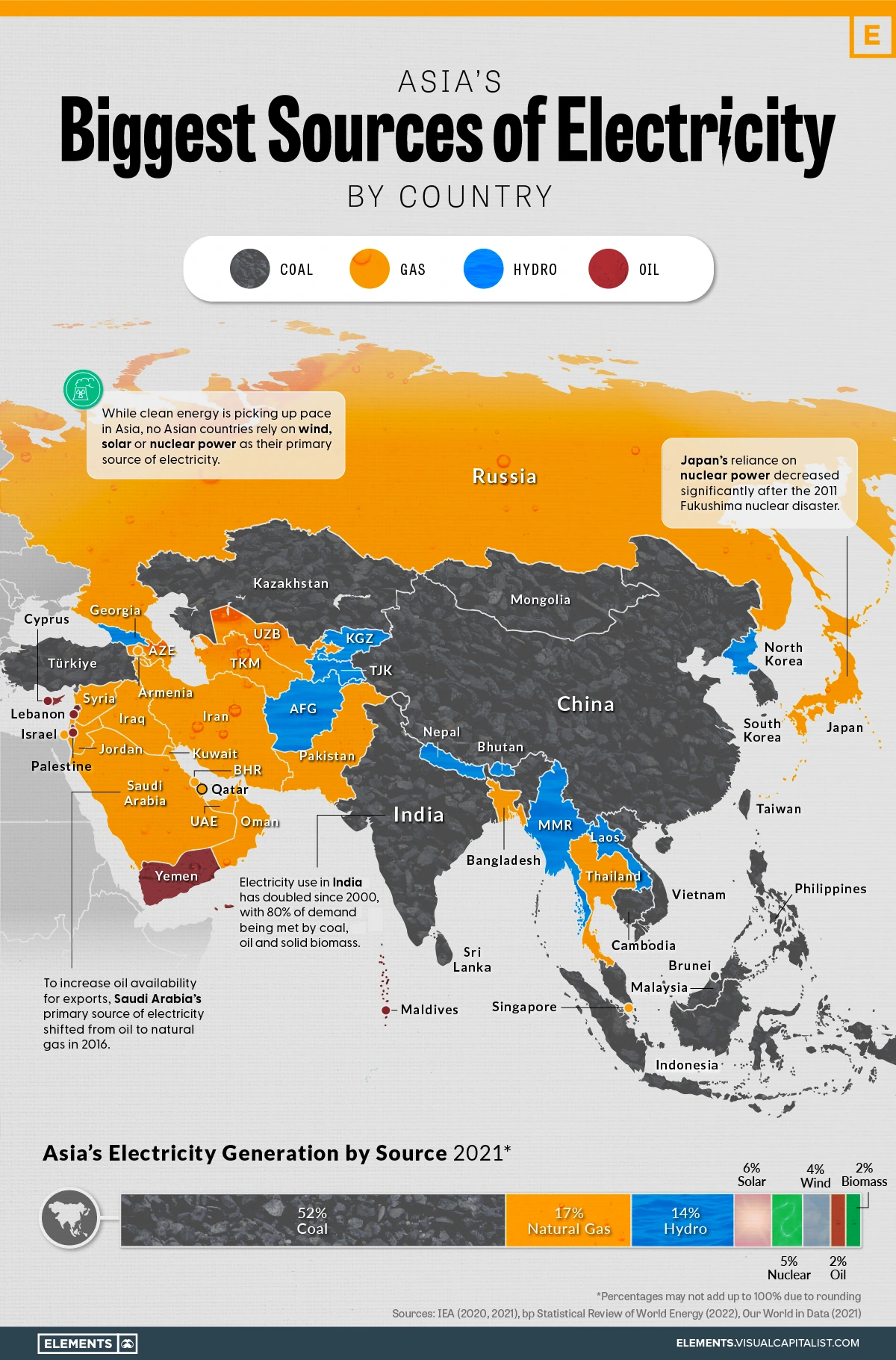
Biggest Sources of Electricity In Asia
Coal
- China
- India
- Mongolia
- Kazakhstan
- Indonesia
- Philippines
- Vietnam
- South Korea
- Malaysia
- Cambodia
- Sri Lanka
- Taiwan
- Brunei
- Turkey
Natural Gas
- Russia
- Japan
- Saudi Arabia
- United Arab Emirates
- Qatar
- Kuwait
- Oman
- Iraq
- Iran
- Syria
- Thailand
- Singapore
- Uzbekistan
- Turkmenistan
- Pakistan
- Bangladesh
- Israel
- Armenia
- Azerbaijan
Hydro
- Afghanistan
- Nepal
- Bhutan
- Kyrgyzstan
- Tajikistan
- Laos
- Myanmar
- Georgia
- North Korea
Oil
- Yemen
- Lebanon
- Palestine
- Jordan
- Cyprus
- Maldives
Other facts:
- While clean energy is picking up pace in Asia, no Asian countries rely on wind, solar, or nuclear power as their primary source of electricity.
- Japan’s reliance on nuclear power decreased significantly after the 2011 Fukushima nuclear disaster.
- Electricity use in India has doubled since 2000, with 80% of demand being met by coal, oil, and solid biomass.
- To increase oil availability for exports, Saudi Arabia’s primary source of electricity shifted from oil to natural gas in 2016.
